- India-EU Free Trade Agreement — The “Mother of All Deals”
Big news on the trade front: On January 27, 2026, India and the European Union wrapped up a massive Free Trade Agreement, already being called the “mother of all deals” for its sheer scale and importance.
Here’s what’s inside:
– Tariff cuts: Most tariffs between India and the EU are out the window, or at least much lower now.
– Covered goods and sectors: We’re talking cars, machinery, textiles, chemicals, medical devices, and plenty more.
– Services and investment: It’s not just about goods — the deal covers finance, digital trade, and broader investments too.
– Strategic teamwork: Both sides are promising to work closer on tech, security, and innovation.
What does this mean for business?
– Indian exporters can tap into the EU’s giant market — about 450 million people — with little to no duty.
– Sectors like textiles, leather, engineering, and IT services in India get a big leg up on the global stage.
– EU companies, meanwhile, get much easier access to India’s fast-growing consumer market, especially for high-value products and services.
Where things stand now
The agreement’s done, but it’s not law yet. The European Parliament, all EU member states, and India’s cabinet still need to sign off. If all goes as planned, the FTA kicks in by 2027.
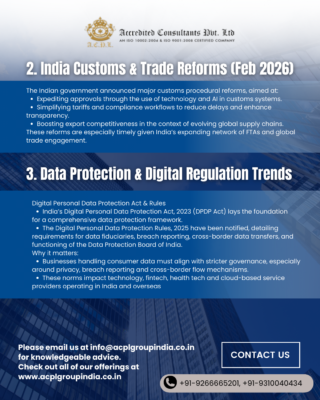
- India Customs & Trade Reforms (Feb 2026)
India’s government just rolled out sweeping new customs reforms. The focus? Speeding up approvals with tech and AI, slashing red tape, and making tariffs and compliance simpler. The goal is to cut delays, boost transparency, and help Indian exports compete globally. Perfect timing too, with India signing deals left and right and getting more active in global trade.
- Data Protection & Digital Regulation Trends
India’s Digital Personal Data Protection Act, 2023 (DPDP Act) is now the backbone of data protection here. The new rules from 2025 spell out what companies have to do — from guarding customer privacy and reporting breaches to handling cross-border data transfers. The Data Protection Board of India is up and running too.
Why should you care?
If your business handles consumer data, you’re now under stricter rules, especially around privacy and moving data overseas. This is huge for tech, fintech, health tech, and cloud service providers — both in India and abroad.
- The Bigger Trade Picture: Other FTAs & Negotiations
– The India–EFTA FTA (with Iceland, Liechtenstein, Norway, Switzerland) has been live since October 2025, making it easier to trade goods and services and invest across these countries.
– The India–UK trade deal is inching closer to reality, with both sides set to get better market access and tariff breaks.
What does this mean for India?
India’s FTA strategy is ambitious. Deals with the EU, UK, and others are all about plugging into global value chains, finding new export markets, and attracting foreign investment.
Tips for Businesses & Readers
Exporters & Trade Pros:
– Once the India-EU FTA is ratified, dig into the new tariff schedules for your sector.
– Update your customs and digital paperwork to align with the latest reforms from India’s customs authority.
Tech & Digital Firms:
– Make sure your privacy policies and data practices meet the DPDP Act and new rules — especially if you deal with cross-border data.
– Stay on top of global data policy shifts (like EU rules) that could influence what happens in India.
Investors & Strategic Planners:
– These FTAs are changing the game for trade and investment — manufacturing, services, and fintech are set for new opportunities.
– Watch the ratification process and regulatory updates as these agreements move from negotiation to real-world action.