
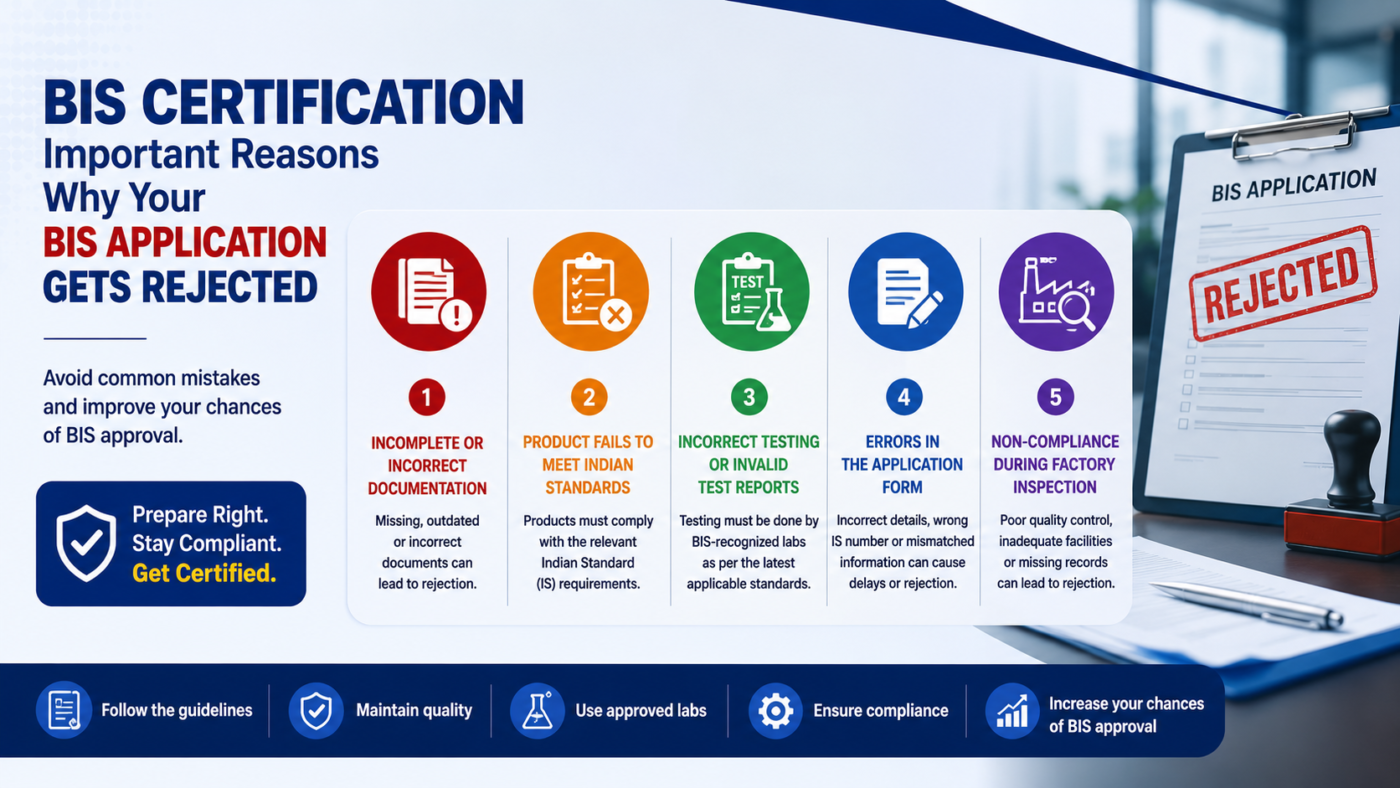
Why Your BIS Certification Application Gets Rejected—and What You Can Do About It
Getting BIS Certification isn’t just another box to tick if you want to sell regulated products in India. Whether you’re a manufacturer or an importer, you’ll likely need to clear some hefty compliance hurdles—ISI Mark Scheme, Compulsory Registration Scheme (CRS), or whatever framework fits your product. But here’s the thing: tons of applications hit roadblocks. Delays, rejections, endless queries—it usually comes down to simple mistakes. Messy paperwork, incorrect test reports, inaccurate product info, or not following the rules trip up a lot of applicants.
So, if you’re gearing up for BIS approval, knowing these common pitfalls can save you a lot of time—and headaches.
1. Sloppy or Incomplete Documentation
Honestly, paperwork kills most BIS applications before they even get off the ground. The certifying folks want to see everything: company registration, factory address, manufacturing license, product specs, test results, brand/trademark documents—the whole nine yards.
But people forget signatures, send in expired docs, or give info that doesn’t match across forms and supporting files. Even tiny mismatches or missing pages mean the process grinds to a halt while someone chases you down for corrections.
What helps: Before you hit submit, go through every document. Make sure the company name, factory address, product details, and brand name line up across everything—no exceptions.
2. The Product Doesn’t Pass BIS Standards
You can have perfect paperwork, but if your product fails testing, you’re back to square one. BIS has strict standards for quality, safety, and performance. If your stuff doesn’t cut it during lab testing—for instance, if the specs don’t match, it flunks a safety check, or the materials just aren’t up to the mark—you’re getting a big red X on your file.
Tip: Do your own internal quality checks first. Study the Indian Standard that applies to your product and run your own tests. That way, you catch gaps early—instead of after burning money on application fees.
3. Bad or Invalid Testing
Product testing isn’t just a formality. It has to be done by an approved lab, under the latest rules, with test reports that are current and legit. If you get a report from the wrong place, if your product sample isn’t the same as the production model, or you miss a required test—they won’t give you a second chance.
How to avoid: Always go to a BIS-recognized lab. Confirm your product is tested against the most recent standards. Don’t cut corners here—it just doesn’t pay off.
4. Application Form Mistakes
Sometimes the paperwork’s correct, tests are done, and you still get questions from BIS. Why? Little errors in the application itself: wrong product category, IS number, a typo in manufacturer details, mismatched brand names, or even factory addresses that don’t align with your test reports.
What to do: Double-check the form itself. Match every detail—no lazy copy-and-paste jobs, no careless typos.
5. Factory Inspection Problems
For schemes where BIS checks your factory, things get real. Inspectors want to see how you run production, keep quality systems, handle raw materials, calibrate equipment, record inspections—the works. If you can’t produce records or your setup is flimsy, expect delays or flat rejection.
Best move: Set up your quality checks well before the inspection. Keep all records—calibration, manufacturing, inspection—easy to access and up to date.
How You Can Boost Your Approval Odds
A smoother BIS certification process starts with getting organized:
– Know your scheme: Figure out if your product is under ISI, CRS, or another BIS setup.
– Learn your standard: Get the correct Indian Standard (IS) number and the latest version of the requirements.
– Gather solid documents: All paperwork should be clear, current, signed wherever needed, and 100% consistent.
– Pick the right lab: Don’t skimp on accredited testing facilities that follow BIS guidelines.
– Keep quality on lockdown: Good records matter—production, testing, calibration, traceability, everything.
– Review, then review again: Check your application and attached docs before you submit.
– Ask for help if stuck: If your product or process is complex, it makes sense to get advice from a regulatory pro.
If BIS Rejects Your Application—Now What?
A “no” doesn’t mean you’re out of the game forever. First, dig in and find out exactly why they rejected or flagged your submission. Fix the weak spots—that could mean updating documents, redoing tests, correcting technical stuff, shoring up your quality system, or filling in missing info. Once you clear the hiccup, resubmit according to their process.
The main goal: figure out what went wrong and make sure you don’t repeat it.
Why Bring in a BIS Consultant?
Let’s be real—BIS certification is a maze. There’s paperwork, lab testing, technical rules, factory inspections, and some very specific standards, often changing over time. If you don’t want to trip up, a solid regulatory consultant can guide you, step-by-step, from figuring out which BIS scheme applies to you, all the way through testing, preparing the submission, handling factory audits, and securing certification. It cuts down errors and gets you to approval—faster.
BIS certification isn’t optional if you want to sell in India—or avoid regulatory messes later. Most application fails happen because of incomplete documents, product flops during testing, silly application mistakes, or gaps at the factory. But with some planning, sharp documentation, proper testing, and solid quality checks, your odds of approval shoot up.
Thinking about BIS certification, ISI Mark, or CRS registration? If you want to skip the headaches, talk to someone who’s done this before.
Need BIS help?
ACPL – Accredited Consultants Pvt. Ltd.
Regulatory consultancy and compliance support for BIS and more.
Email: info@acplgroupindia.co.in
Phone: +91 92666 65201 | +91 93100 40434
Address: B3, Sector 6, Noida – 201301, Uttar Pradesh