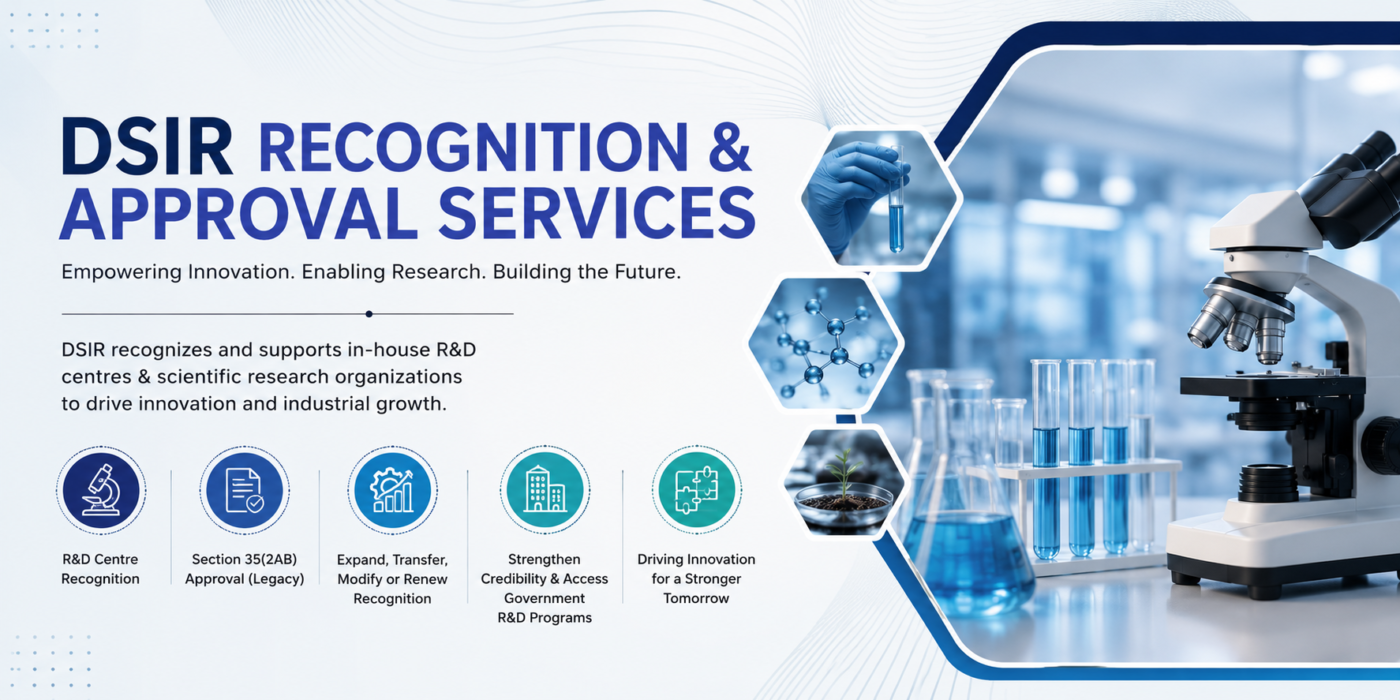
Innovation keeps industries moving forward, and organizations that put time and money into research and development are right at the center of India’s push for new technology. To support this, the Department of Scientific and Industrial Research (DSIR) recognizes in-house R&D centers and scientific research organizations that meet their standards.
DSIR doesn’t hand out industrial operating licenses, but their recognition really matters. It helps organizations join government R&D programs, boosts their reputation, and makes them eligible for a range of government benefits.
Here’s a clear look at what DSIR handles: how they approve and recognize R&D centers, what Section 35(2AB) tax approvals used to mean, and the different services they offer to recognized R&D facilities.
What Exactly Is DSIR?
DSIR sits under India’s Ministry of Science & Technology and works to push scientific research and help industry develop its own technology. They build links between research institutions and businesses, and their main job is to recognize in-house R&D units and Scientific and Industrial Research Organizations (SIROs). With DSIR’s stamp, these organizations gain credibility and can take part in national innovation efforts.
Section 35(2AB) Approvals: A Bit of History
One of DSIR’s crucial roles has been granting approvals under Section 35(2AB) of the Income-tax Act, 1961. If a company had an approved in-house R&D setup, it could deduct qualified research expenses when filing taxes.
DSIR took care of:
Approving R&D facilities (using Form 3CM)
Handling the compliance reports that tax rules required
Just a heads up: The rules for Section 35(2AB) have changed a lot over the years. The generous tax deductions that were a big draw before aren’t the same now. But if your organization got DSIR approvals in the past, you’ll still need those for older records, compliance, and audits.
Other Approvals and Services from DSIR
Recognizing R&D centers isn’t all DSIR does. They handle a range of requests for recognized organizations, like:
- Getting New R&D Centers Recognized
When companies set up new research labs or expand into new locations, DSIR lets them get each new or additional R&D facility officially recognized. This covers new labs, specialized divisions, or simply growing to different sites.
- Transferring Recognition After Business Restructuring
When there’s a merger, takeover, or new owner, DSIR helps transfer the recognition so the new entity can keep it without missing a beat.
- Name Changes or Changes in Legal Status
If a company changes its name, converts to an LLP, or goes through any restructuring, DSIR updates their records once the organization submits the right paperwork.
- Changing the Facility Address
If your R&D center moves, you need to let DSIR know and get approval for the new address. Usually this means sending lease agreements, proof of ownership, or an updated facility layout.
- Expanding Your R&D Facilities
Take on new research, buy more equipment, or add new divisions? DSIR accepts applications to expand recognition, so your official status matches what’s really happening on the ground.
- Renewing DSIR Recognition
Recognition isn’t permanent—you have to renew it every so often. Before it expires, send DSIR updates on your R&D work, staff, infrastructure, project lists, financial details, and any other information they ask for.
What DSIR Doesn’t Cover
Keep in mind, DSIR isn’t the place to go for:
Industrial manufacturing or factory licenses
Environmental clearances
Import/export permissions
Product or commercial licenses
Those fall outside DSIR’s scope. Their main job is giving recognition to R&D organizations and in-house research setups.
Why DSIR Recognition Matters
Getting recognized by DSIR means more than just a certificate:
- It shows official R&D capability, which boosts your credibility
- Makes it easier to work with government or research partners
- Opens doors to government-funded research programs
- Supports you in forming research collaborations
- Can qualify you for certain tax benefits or other incentives
- Helps foster a strong innovation culture within your organization
Who’s Eligible?
- DSIR recognition is open to a wide group:
- Manufacturing companies with R&D labs
- Pharma and biotech companies
- Engineering firms and chemical industries
- Electronics, semiconductor, and automotive companies
- Medical device makers
- Scientific and industrial research institutions
Typical Documents You’ll Need
It varies a bit depending on what you’re applying for, but you’ll usually have to share:
- Company founding documents
- Details about your R&D setup
- Organization chart and R&D team profiles
- Inventory of equipment and ongoing or finished projects
- Financials for R&D expenses
- Facility layout plans
- Any earlier recognition documents, if you’re renewing or updating
How ACPL Can Support You
Accredited Consultants Private Limited (ACPL) offers complete support for DSIR recognition and compliance across India. They help with:
- Initial DSIR recognition for in-house R&D centers
- SIRO registration support
- Recognizing additional R&D units
- Renewals and address or status changes
- Transferring recognition after mergers or restructuring
- Preparing documents and filing applications
- Coordinating with DSIR directly
- Managing every step of compliance
Final Thoughts
DSIR plays a key role in pushing industrial innovation and research ahead in India. Recognition strengthens your position for national innovation programs and helps you take advantage of all the benefits government policy offers.
Whether you’re setting up a new R&D center, expanding your facilities, renewing recognition, or just need to update your organizational info, locking down your DSIR recognition is a smart move for any serious research-driven organization.
ACPL guides you through the process, making sure your paperwork, compliance, and applications are all in order—so you can focus on your research, not the red tape.