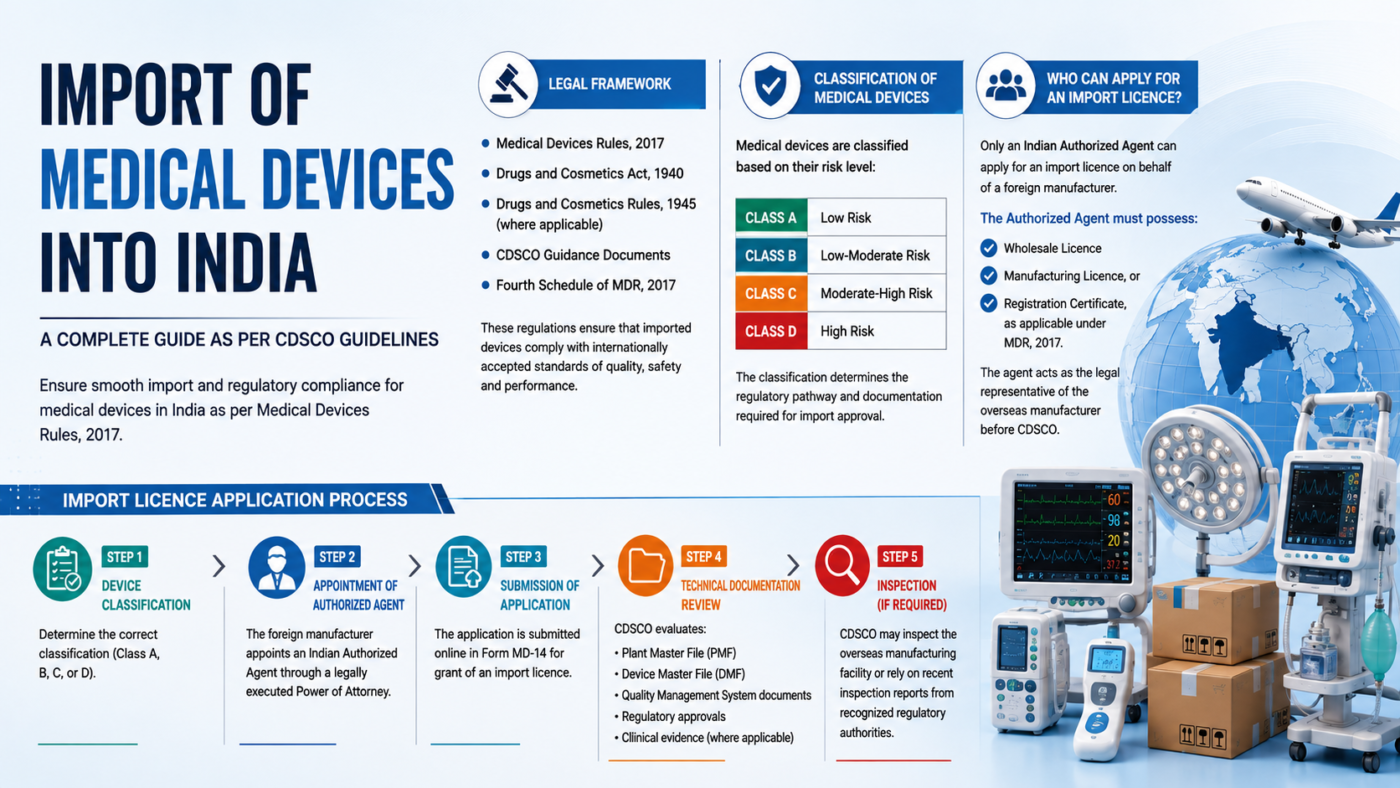
Importing medical devices into India isn’t simple—it’s tightly regulated by the Central Drugs Standard Control Organization, or CDSCO. The Central Licensing Authority (CLA), which is part of CDSCO, actually handles the approval process for bringing in any medical device that’s been officially “notified” under the Medical Devices Rules, 2017.
The way it works is pretty straightforward: foreign manufacturers can’t deal with the Indian regulators directly. Instead, they need to appoint an Authorized Indian Agent (or Authorized Indian Representative—AIR for short). This person or company becomes their official legal face in India. The agent needs at least a valid wholesale or manufacturing license, or a registration certificate, depending on exactly which licenses apply under the rules. It’s their job to deal with all regulatory paperwork, communication, and to keep up with compliance and reporting, even after the product hits the market.
Legally, the main documents you’ll run into are the Medical Devices Rules, 2017; the good old Drugs and Cosmetics Act of 1940; and where relevant, the Drugs and Cosmetics Rules of 1945. CDSCO also issues guidance docs, plus the Fourth Schedule of MDR 2017 spells out some extra requirements. The big picture is to make sure anything imported for use in India is up to snuff when it comes to international quality, safety, and performance standards.
Medical devices in India get sorted into four classes based on how risky they are. Class A is low risk, Class B is low to moderate, Class C covers moderate to high, and Class D is for high-risk stuff. The class your product lands in sets the bar for what paperwork, scrutiny, and approval process you’ll face.
Here’s how the import licence process usually shakes out:
- 1. Classify the Device:You start by figuring out which class your device falls into using the Medical Devices Rules. Get this step right, because it drives everything from here.
- Set Up Representation: A foreign manufacturer formally appoints their Indian agent. This isn’t just on good faith—it needs a properly executed Power of Attorney spelling out what the AIR can do.
- Submit Your Application:The Indian agent files the application through the CDSCO SUGAM Portal. It’s all electronic and uses Form MD-14. You’ll need to pay the government fee and gather the required documents.
- Technical Review: CDSCO reviews your files. They look at documents like the Plant Master File and Device Master File, proof that your manufacturing system meets standards like ISO 13485, regulatory approvals from countries like the US or Europe (if you’ve got them), clinical evidence where needed, labeling, instructions for use, and so on. If they have questions, you have to respond within the set timeline or the process stalls.
- Factory Inspection (if needed): For higher-risk devices or if documentation isn’t enough, CDSCO might inspect your manufacturing site overseas. Sometimes they’ll accept recent inspection reports from other major regulatory authorities instead. The inspection checks for compliance with manufacturing and quality standards.
All told, this process is designed to make sure only medical devices that meet India’s standards for safety, quality, and performance actually make it into the market. No cutting corners. If you’re following the steps, the system is clear, but you need to have your paperwork and representation sorted from the very beginning.
Contact Us
B-3, Sector-6, Noida – 201301, Uttar Pradesh, India
Mon – Sat: 10:00 AM – 6:00 PM