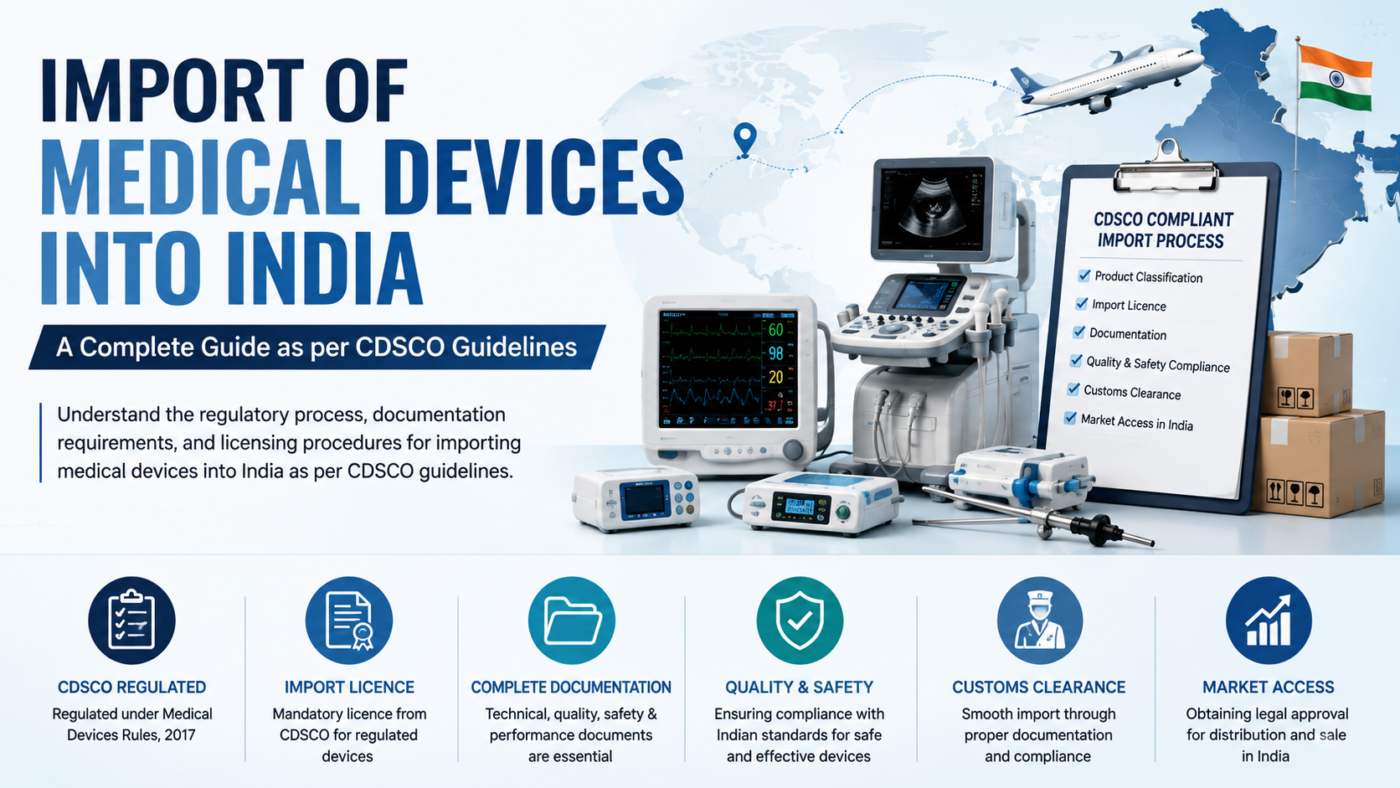
India’s medical device market is booming. Demand keeps rising for new diagnostic and treatment tools, and global manufacturers have noticed—India’s now a key destination for medical technology from around the world. But there’s a catch: before anything crosses the border, it has to get past the Central Drugs Standard Control Organization (CDSCO), which sets high standards for safety, quality, and performance under the Medical Devices Rules (MDR) of 2017.
So whether you’re a foreign manufacturer, an Indian importer, or an authorized rep in India, you need to get a handle on CDSCO’s system. Here’s what you need to know—from legal basics to the paperwork and compliance required to actually land devices on Indian shelves.
Who Regulates What?
CDSCO, operating under India’s Ministry of Health & Family Welfare, calls the shots. They:
– Approve import licences for all medical devices.
– Register foreign manufacturers and inspect their factories.
– Make sure products meet MDR 2017 standards.
– Check up on safety and quality after products hit the market.
– Run compliance checks and sometimes show up for audits.
What’s the Law?
Two main laws set the framework for device imports:
– The Medical Devices Rules, 2017
– The Drugs and Cosmetics Act, 1940, plus its 1945 Rules
CDSCO issues updates, notifications, and guidelines, so it’s not static. If a device is on CDSCO’s regulatory list, you need an import licence before entering, selling, or even advertising it in India.
Device Class Matters
Devices fall into four classes, depending on risk:
– Class A: Low risk
– Class B: Low-Moderate risk
– Class C: Moderate-High risk
– Class D: High risk
Each class has its own level of regulatory scrutiny.
Who Can Apply for an Import Licence?
Not just anyone. Applications go through:
– Indian importers
– Authorized Indian agents of foreign manufacturers
– Indian subsidiaries of foreign manufacturers
– Authorized distributors with the manufacturer’s green light
Foreign players by themselves can’t apply—they need an Authorized Indian Representative (AIR).
What Do You Need Before You Apply?
Here’s what you need to have ready:
– If you’re outside India, officially appoint your AIR.
– Get a valid manufacturing licence in your home country.
– Secure a Free Sale Certificate or its equivalent if required.
– Show ISO 13485 quality certification.
– Prepare full technical documentation.
– Confirm your device class.
– Label products the right way for India.
Documents CDSCO Wants to See
This isn’t an exhaustive list, but expect to submit:
– A cover letter and Power of Attorney
– Your manufacturing licence
– Free Sale Certificate
– ISO 13485 certificate
– Device Master File (DMF)
– Plant Master File (PMF)
– Relevant approvals (CE, FDA) if you have them
– Declaration of Conformity
– Product label samples and catalogue
– Instructions for Use (IFU)
– Clinical evaluation data, risk analysis, and performance studies especially for diagnostic devices
CDSCO may ask for more, depending on what you’re importing and its risk level.
How to Get an Import Licence – Step by Step
- Figure out the right device class.
- If you’re foreign, appoint an AIR.
- Compile all the paperwork—to CDSCO’s standards.
- Apply through the online CDSCO SUGAM portal. Pay the required fee.
- Wait while CDSCO reviews your application. They might ask questions or request extra info.
- When they’re satisfied, they’ll issue the licence.
- Once you have the licence, you can start importing—but keep up with ongoing regulatory requirements.
What Does the AIR Actually Do?
The AIR isn’t just a rubber stamp. They:
– Serve as your official Indian contact for CDSCO.
– Make sure you’re staying compliant.
– Handle any communication with CDSCO.
– Report safety problems, recalls, and complaints.
– Keep track of sales and distribution.
– Help out with inspections and audits.
Staying Compliant After Approval
After your licence comes through, your work isn’t over. Manufacturers and importers still have to:
– Report safety issues (materiovigilance)
– Handle recalls by the book
– Keep licences current
– Tell CDSCO about any significant changes
– Maintain accurate records and proper labels
– Keep import documents on file
What Goes Wrong—And How to Avoid It
Common problems during import registration:
– Incorrect device classification
– Incomplete or sloppy master file (DMF)
– Technical documents missing or out of date
– Labels not meeting Indian rules
– Delays getting papers from overseas partners
– Weak quality management evidence
– Complicated regulatory questions from CDSCO
A solid application, up-to-date documents, and expert guidance can help sidestep these problems and keep the process moving.
Where to Get Help
Accredited Consultants Private Limited (ACPL) offers full support for CDSCO medical device imports—including:
– Device classification guidance
– Help completing import licence applications
– AIR services
– DMF and PMF prep
– Review of all documents before submission
– Compliance checks and regulatory feedback
– Replying to follow-up queries from CDSCO
– Ongoing compliance and licence renewals
Their regulatory professionals know the process well and guide you from start to finish.
Final Thoughts
Getting medical devices into India isn’t just about following a checklist. Every step—from picking the right rep and organizing paperwork to staying on top of compliance—matters. If you plan carefully and work with people who know the system, you can successfully introduce your devices into one of the world’s fastest-growing markets, all while meeting India’s strict CDSCO standards.
Contact Us
B-3, Sector-6, Noida – 201301, Uttar Pradesh, India
Mon – Sat: 10:00 AM – 6:00 PM