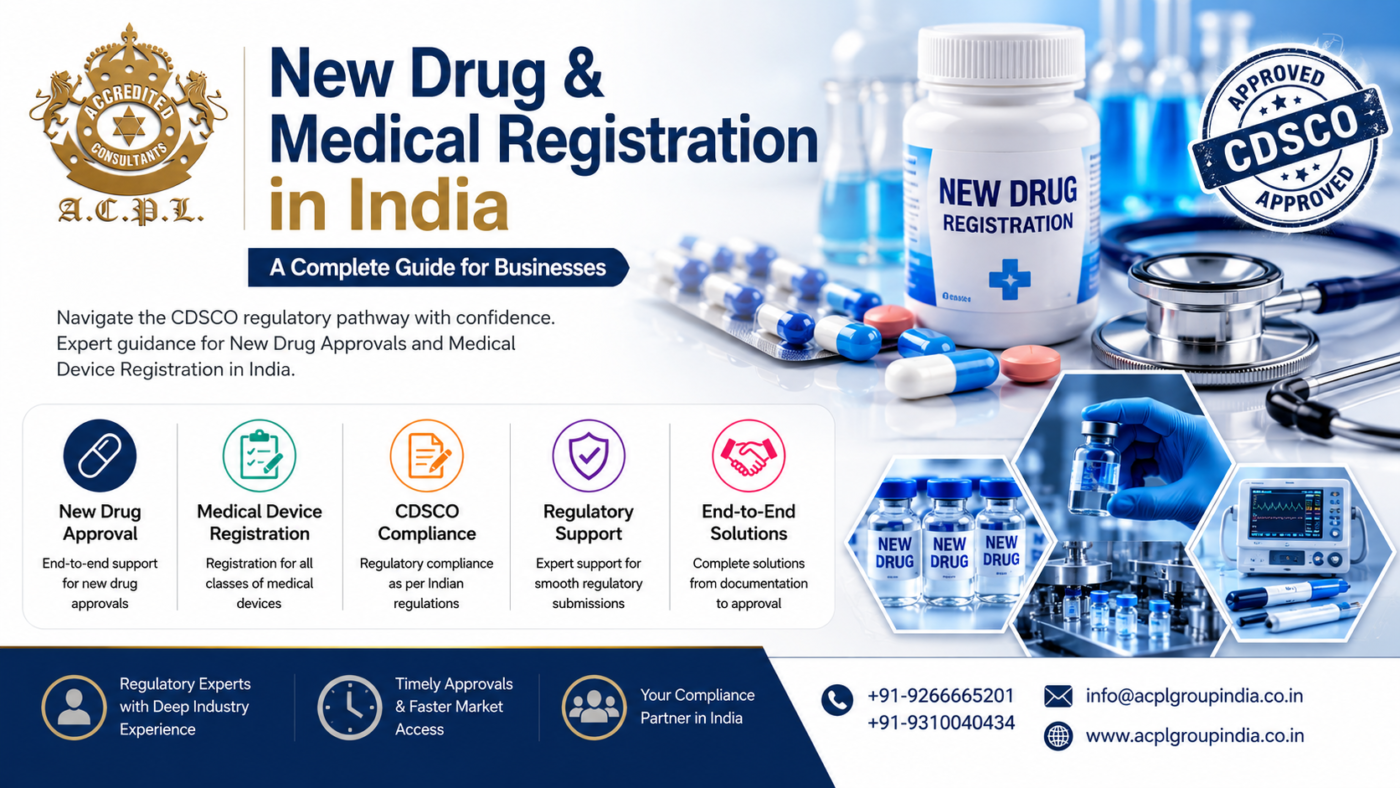
New Drug & Medical Device Registration in India: A Complete Guide for Businesses
India’s healthcare and pharmaceutical market is booming. Companies are racing to launch new medicines and advanced medical devices, but the key to breaking into this space is clear—navigating the country’s complex regulatory system. Whether you manufacture, import, or distribute, you have to play by the rules if you want to do business here.
The Central Drugs Standard Control Organization (CDSCO), working under the Ministry of Health & Family Welfare, calls the shots on drug and device approvals. You can’t afford to get this part wrong—the right paperwork and process open the door to the Indian market and keep you on the right side of the law.
At ACPL Group India, we’ve helped plenty of companies tackle these regulations. We know this system inside out, and we’re here to guide you through it, step by step.
What’s a New Drug Registration in India?
Let’s get this straight—a “new drug” isn’t just something invented last week. It means any medicine that hasn’t seen much use in India or has only recently gotten approval for sale here. Before any company can produce, import, or sell a new drug, they need the CDSCO’s green light.
This approval isn’t just a rubber stamp. It means:
– The drug’s safe for people.
– It actually works for what you say it’ll do.
– It’s made to solid quality standards.
– It’s backed by proper clinical trials.
Who’s in Charge?
The CDSCO handles everything related to new drug approvals—clinical trials, import licenses, permission for manufacturing, medical device registrations, even some cosmetics. They’re the ones you have to deal with.
How New Drug Registration Works in India
1. Prepare the Paperwork
First, get your documents together. You’ll need:
– Details on the product’s makeup
– How it’s manufactured
– Data showing it won’t fall apart on the shelf
– Clinical trial results
– Reports on how it acts in the body and its safety
– Labeling and packaging info
2. Submit Your Application
You’ll send all this through the CDSCO’s online portal, with the right forms and government fees. Depending on whether you’re importing or making your drug, if it’s biological or chemical, and whether it already has international approvals, the process might shift a bit.
3. Clinical Trials and Studies
Sometimes, the CDSCO will ask for local clinical trials or studies to see how your drug measures up in the Indian population. This can include testing for how well it works and if it’s safe compared to similar drugs.
4. Technical Review
The experts at CDSCO dig into your data—quality, safety, clinical evidence, and more. If they have questions or spot gaps, you need to answer fast to keep your application moving.
5. Approval or Go Back to Start
Once you’ve checked all the boxes, CDSCO gives you a thumbs-up for importing, manufacturing, or selling your drug. At that point, you’re free to hit the market.
Medical Device Registration in India
Medical devices follow a similar, tight set of rules under the Medical Device Rules, 2017. First, figure out where your device fits in terms of risk:
Class A: Low Risk
Class B: Low-Moderate Risk
Class C: Moderate-High Risk
Class D: High Risk
This covers everything from basic surgical scissors to high-tech implants.
Registration Process:
1. Determine Classification
Decide which risk category your device fits into.
2. Appoint an Indian Agent (for Foreign Makers)
If you’re based outside India, you need an Indian representative who’s authorized to handle things locally.
3. Gather Documents
Prepare your technical files—Device Master File, Plant Master File, certifications (like ISO), free sale certificates, approvals from the US or Europe, testing and clinical evaluation reports.
4. File with CDSCO
Apply online through the CDSCO’s portal.
5. Technical Assessment
Regulators check your device for safety, quality, and performance. Missing details or weak reports slow things down.
6. Get Registration Approval
If everything’s in order, you’ll get your registration certificate or import license.
What Trips Up Most Companies?
– Messy or incomplete documents
– Rules changing without warning
– Delays caused by technical questions from regulators
– Picking the wrong classification
– Not following Indian quality standards
These are hurdles, not dead ends. Working with the right regulatory experts keeps you on track.
Why Bother with All This Compliance Stuff?
You want to do business in India? You need legal market entry, consumer trust, and credibility. If you skip the rules, best case, you’re delayed. Worst case? Seizures, blocked shipments, revoked licenses, or hefty fines.
How ACPL Group India Makes it Easier
We handle everything regulatory—CDSCO registration, drug and device approvals, import licenses, document prep, compliance management, license renewals, and technical files. With years in the industry, we know how to smooth out the entire process and handle the tricky bits.
To Sum Up
India’s a land of real potential for pharma and medical device companies, but you can’t dodge the rules. Mastering CDSCO regulations and getting your paperwork in order means faster approvals and a smoother entry.
Whether you’re an Indian company or looking to step into the market from abroad, professional support makes the journey easier and less risky.
If you’re ready to register a new drug or medical device in India, reach out to ACPL Group India. We’ll help you get it done right.
Contact Us
ACPL Group India
B-3, Sector-6, Noida – 201301, Uttar Pradesh, India
+91-9266665201
+91-9310040434
info@acplgroupindia.co.in